Secondment Diaries: A deep dive into Mozambique’s Cybersecurity – and Kizomba
My secondment in Mozambique is now halfway through. As I spend a month back in Finland before returning to Mozambique, it feels like a good moment to reflect on what has been a great experience so far.
This secondment is facilitated through the Finnish Digital and Green Transition (FDGT) Project. FDGT is funded by the Finnish Ministry of Foreign Affairs and implemented by HAUS. The project aims to promote sustainable digital public sector development in partner countries, while at the same time, it provides an opportunity to share Finnish expertise in digitalization, strengthen international cooperation, and create new partnership opportunities for Finnish organizations and companies.
Over the past months, I have had the privilege of working closely with colleagues and stakeholders in Mozambique, gaining valuable insights into the country’s digital transformation efforts while contributing my own experience and perspectives. This blog post reflects on some of the highlights, lessons learned, and experiences from the first half of my secondment.
Arriving at something new
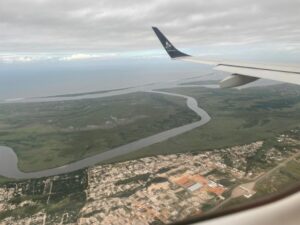
I arrived in Maputo, the capital of Mozambique, at a time when global geopolitical tensions were increasingly shaping discussions on security and digital resilience. After a day-long journey via Paris and Johannesburg, my first impression of Mozambique unfolded from above: the ocean, the vast coastline, and the archipelago off Maputo. The view was striking, and the city immediately left a strong impression.
Reinforcing Mozambique’s cybersecurity
The purpose of my assignment is to support the Government of Mozambique in strengthening its national cybersecurity framework. The overall objective is to bring Finnish, European, and international cybersecurity expertise into the Mozambican context, while ensuring alignment with regional frameworks, particularly those of the Southern African Development Community (SADC).
The work is carried out in collaboration with Gofore, a Finnish digital transformation consultancy, and INTIC (Instituto Nacional de Tecnologias de Informação e Comunicação), the government institution responsible for ICT development and national coordination on digitalisation and cybersecurity. I quickly learned that what initially felt distant and unfamiliar from a European perspective is, in fact, a region undergoing rapid digital transformation – What an exciting time to be involved!
Starting by assessing the 2021–2025 Cybersecurity Strategy
I began working on the assignment remotely in early February 2026 by reviewing extensive Portuguese-language documentation. My Finnish colleague, Oula Järvinen (Gofore), and I arrived in Maputo on 10 March 2026 and were honored to immediately join a highly professional and committed national core team.
We were introduced to both the institutional environment and the operational context in which INTIC functions, including its role in coordinating ICT development initiatives and supporting government stakeholders across sectors.
Fruitful stakeholder discussion guiding our work
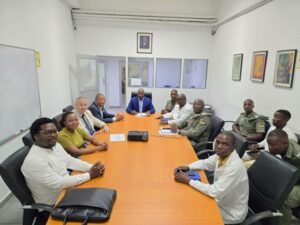
The assessment of the 2021–2025 Cybersecurity Strategy began immediately – effectively combining document analysis with structured stakeholder engagement. We conducted face-to-face consultations with senior representatives from more than a dozen ministries and organisations responsible for critical infrastructure and essential services.
Following Oula’s return to Finland, I continued the fieldwork in Mozambique until mid-June. The methodology extended beyond bilateral meetings and included multi-stakeholder workshops and structured surveys targeting both institutional stakeholders and citizens.
Based on this work, we developed a national cyber threat assessment during April–May, which serves as a key analytical foundation for the new national cybersecurity strategy.
Resemblance with Finnish cybersecurity landscape in the early 2000s
Mozambique’s first National Cybersecurity Strategy covered the period 2021–2025. A comprehensive evaluation of this strategy formed a central starting point for our work. In some respects, Mozambique’s current cybersecurity development stage resembles Finland’s situation in the early 2000s: clear progress has been achieved, but implementation capacity remains a critical area for further development.
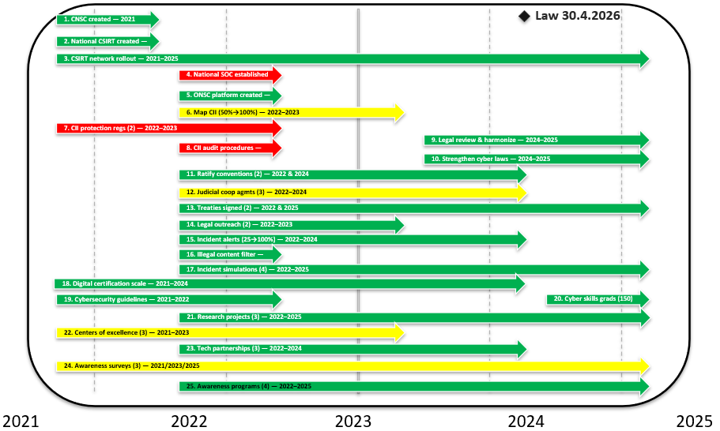
Most initiatives had either been completed or were already well advanced, although not fully within the original schedule. At the time of the evaluation in May 2026, the overall situation appeared positive: 18 initiatives had been implemented, 4 were partially completed, and 3 were still ongoing. The timetable had been ambitious, particularly given the substantial amount of legislative work required.
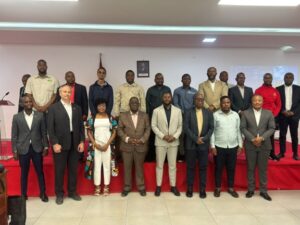
Oula Järvinen later rejoined the assignment at the turn of May–June to support provincial visits, during which workshops were organised across Tete, Nampula, and Inhambane provinces. He also delivered cybersecurity presentations at the Mozambique – EU Business Forum in June in Maputo.
While much of my time was spent working on cybersecurity policy and stakeholder engagement, understanding Mozambique required looking beyond official meetings and government institutions. Some of my most valuable insights came through everyday interactions and local culture.
Deepening understanding through dance
Understanding the local cultural context proved essential for building trust and effective collaboration. For me, dance provided a natural entry point.
Kizomba, a dance form originating from Angola, has long been integrated into Mozambican urban culture. Its slow tempo and fluid movements are well suited to the local environment. Participation in local dance schools and events offers a practical way to engage with communities and build informal networks.
During my three-month stay, the dance community became a valuable informal channel for connecting with people from different parts of Mozambican society. Through these interactions, I met individuals from a wide range of backgrounds, for example banking and mining executives, professionals in public- and private-sector ICT and security, service industry workers, healthcare experts, engineers, advisors, and journalists—as well as many ordinary residents whose perspectives reflected everyday life in Maputo. The network also included highly skilled ICT professionals working in South Africa.
These encounters complemented my formal professional engagement and became one of the most meaningful personal dimensions of the assignment. More broadly, engaging in local hobbies proved to be one of the most effective ways for an international expert to integrate into the local context. These informal networks did not replace formal stakeholder engagement; rather, they deepened my understanding of Mozambique’s social fabric, professional landscape and the rhythms of everyday life in Maputo.
What’s Next?
While I am temporarily back in Finland, Mozambican authorities are reviewing the draft National Cybersecurity Policy and Strategy for 2026–2030. When I return, the focus will shift to consultations and validation with key stakeholders, including government ministries, critical infrastructure operators, and state-owned ICT organisations.
One observation from the first half of the assignment is the growing potential for collaboration between Mozambique and Finnish organisations. There is increasing demand for expertise in cybersecurity, digital infrastructure, and capacity development – areas where Finland has strong experience to offer. Discussions with both public and private-sector stakeholders also highlighted how cybersecurity is increasingly viewed as an enabler of investment, digital services, and economic growth. Building trust in the digital environment is becoming an important part of Mozambique’s broader development agenda.
Mozambique’s digital transformation is progressing rapidly, creating an opportunity to embed secure and sustainable practices from the outset. At the same time, the experience has shown that lasting progress depends not only on technical solutions, but also on strong institutions, effective cooperation, and long-term commitment.
The coming months will be an important test of how strategic plans can be turned into practical implementation and lasting resilience. For now, I am grateful for the opportunity to contribute to this work and eager to return to Maputo to continue the journey alongside my Mozambican colleagues and partners.
Written by Perttu Luhtakanta