Digital for Tanzania brought AI governance, data protection and cybersecurity experts to Dodoma
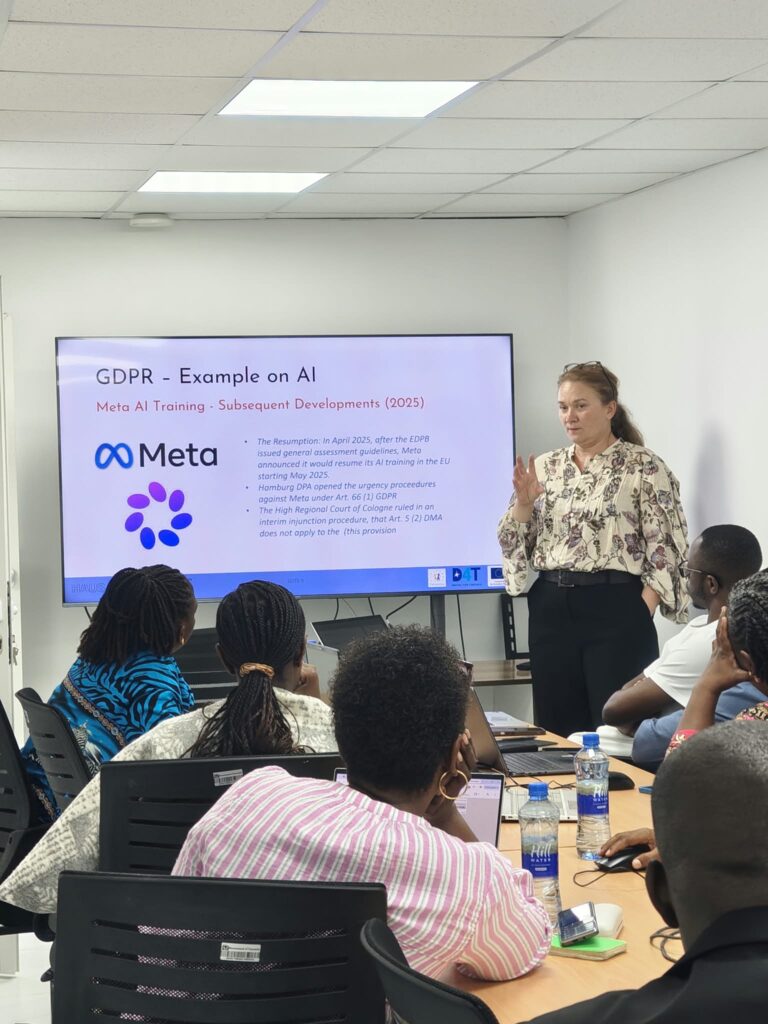
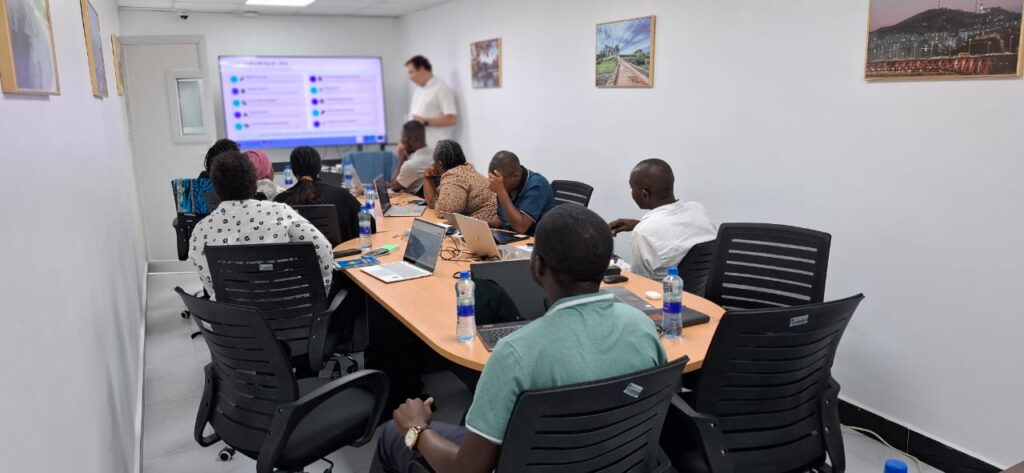
From 7 to 11 September 2026, the Digital for Tanzania (D4T) Twinning project held a joint training on key areas of digital transformation in Dodoma, Tanzania. The training brought together five short-term experts from Estonia and Germany to work with Tanzanian public sector participants on AI governance, data governance, personal data protection and cybersecurity.
The training was delivered by Mr. Margus Mägi, Mr. Risto Rahu and Mr. Tambet Artma from Estonia, and Ms. Oksan Karakus and Ms. Anna Jacobson from Germany. Mr. Jani Ruuskanen, Resident Twinning Adviser for the Digital for Tanzania project, opened the training alongside Mr. Stanley Mahenge from the Tanzania ICT Commission (ICTC).
A week structured around four themes
The five-day programme was organised around a daily theme, moving from strategic questions to operational practice:
- Monday – AI strategic planning and governance. The day opened with a session on the evolution of digital society and the constants of governance – trust, identity and accountability – in the age of AI, followed by a non-technical introduction to AI in the public-sector context, a design-thinking workshop on quick wins for digital society, and a session on digital governance and AI governance models.
- Tuesday – Data governance in the AI era. Sessions covered governing public-sector AI through mandate, risk and accountability; operationalising AI governance across the full AI lifecycle, from idea to retirement, and an overview of the EU AI Act and related regulation, ending with a QA-session with trainers.
- Wednesday – Personal data protection in relation to AI. The day examined the ethical considerations and legal frameworks around AI, including the EU Charter of Fundamental Rights and the interplay between the AI Act and the GDPR, data subject rights and their limitations in AI contexts, the roles of data protection and AI officers, and closed with hands-on practical scenarios.
- Thursday – Cybersecurity and AI risk management. Sessions addressed the current threat landscape, the fundamentals of risk management including AI-specific risk, and an interactive risk-assessment workshop, followed by guidance on preparing for and responding to cyberattacks.
- Friday – Artificial intelligence use cases. The week closed with a look at how Estonia has applied AI across the public sector – from early pilots to operational solutions in courts, healthcare, border control, agriculture and education – alongside further AI use cases from the European Union and Germany, before a closing session.
Building on earlier trainings
The Dodoma training continued a series of D4T capacity-building events held in 2026, following an assessment training on data quality, personal data protection, cybersecurity and preparedness in Dar es Salaam in May, a training on digital innovation and agile governance in June, and a training on AI, cybersecurity, personal data protection and emerging technologies in July. Each training followed the Twinning method of train-the-trainer, aiming for a more permanent transfer of capacity to Tanzanian institutions.
About Digital for Tanzania (D4T)
Digital for Tanzania is an EU Twinning project supporting the digital transformation of Tanzania through Government-to-Government cooperation. The project is led by HAUS Finnish Institute of Public Management, with the Estonian Centre for International Development (ESTDEV) and Germany’s Federal Ministry for Digital and Transport and Federal Ministry for Economic Affairs and Climate Action (backed by GIZ) as junior partners. It runs from 14 July 2023 to 31 December 2026 with a budget of €2,000,000, funded by the Delegation of the European Union to the United Republic of Tanzania and the East African Community, with the Ministry of Communication and Information Technology (MCIT) of Tanzania as beneficiary organisation.
The project’s specific objectives are to future-proof Tanzania’s cybersecurity, privacy and data protection framework and skills; to strengthen interoperability, data governance and management capacity in government; and to improve cybersecurity, privacy and data protection skills in the private sector and research community, including addressing the gender digital divide. Deliverables include analysis and recommendations, train-the-trainer workshops and trainings, and study visits to Estonia, Finland and Germany.


HAUS builds a new route to international expert assignments
15.09.2026
HAUS Finnish Institute of Public Management is opening a new route to international expert assignments. Through the new Dynamic Purchasing