Who Cuts the Stone? What #OIC2 Taught Us About Building a Data Ecosystem
Follow-up to Data Is Botswana’s New Diamond
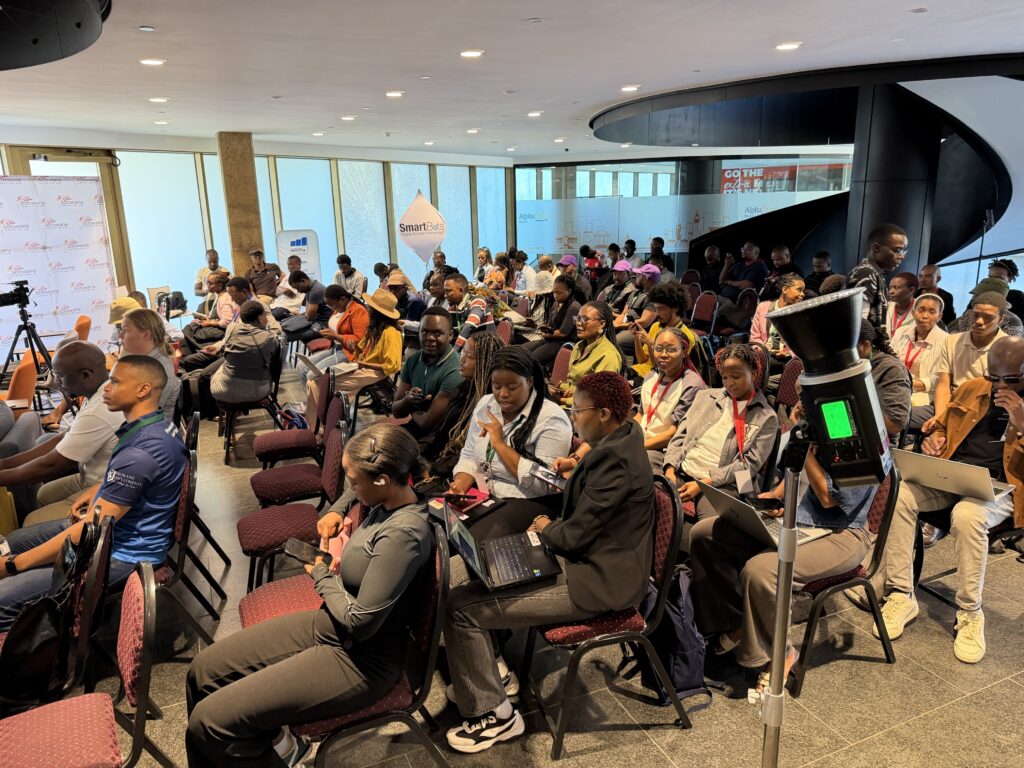
A month ago I argued that Botswana’s next diamond is invisible, and that the institutions holding it would have to move from gatekeepers to enablers. That was the argument. The Open Data Innovation Challenge 2 (#OIC2) was the test.
Three days at the BDIH Science & Technology Park in Gaborone. Twenty-four teams, selected from more than 270 applications. Four tracks — Discovering Botswana, Resilient Health Systems, Climate-Resilient Agriculture, and Botswana’s Environmental and Energy Transition. More than half of the innovators were women; more than half were under 30.
I am deliberately not writing the event report. The interesting part is not what happened, but what it revealed about how an ecosystem actually gets built.
Insight one: the bottleneck was never the data
The most instructive moment of the weekend was quiet. Teams discovered that, if not all, much of what they needed was published. The constraint wasn’t just access—it was imagination, framing, and the skill of turning a table into a product.
That inverts a familiar assumption. We tend to treat open data as a supply problem: publish more, publish better, then wait. #OIC2 suggested the harder half is demand-side capability. A dataset nobody knows how to interrogate is not an asset; it is a cost. Which means “open by default” is necessary but not sufficient — publishing has to be paired with sustained investment in the people who will use it.
Insight two: the ecosystem effect came from collaboration, not competition
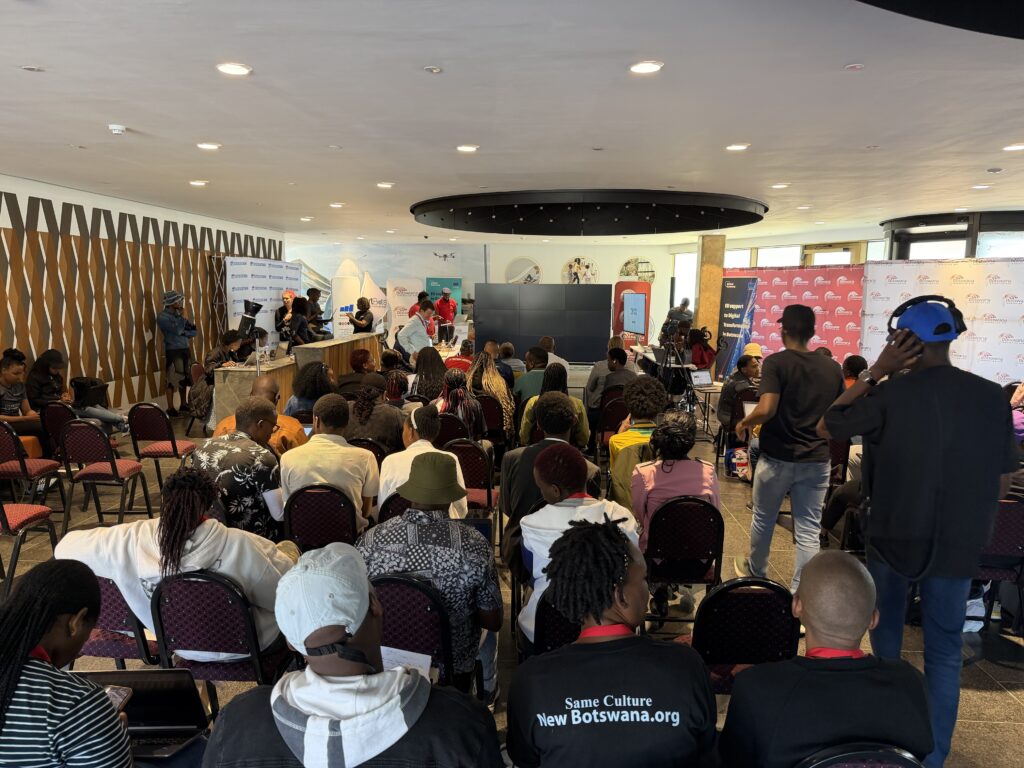
The tracks were competitive. The room was not. Teams shared methods, datasets, and workarounds across tables—the mentors were available as data sherpas and pushed product thinking across all the teams.
That behaviour is the ecosystem forming in real time. Innovation ecosystems are not built by producing winners; they are built by raising the floor. When 24 teams leave knowing more than they arrived with, the value created far exceeds the four prizes awarded. Congratulations, of course, to the track winners — OtherLands, Medi-Live, Moozy AI and Green Flame Digital — but the durable output is the 24 teams, not the four.
This has a design implication for anyone running these challenges: build for spillover. Shared data coaches, open documentation, cross-team sprints and public retrospectives are not soft extras. They are the mechanism by which a three-day event becomes a permanent capability.
Insight three: a challenge is the cheapest institutional reform tool we have
Here is what a hackathon does to a public institution that no policy memo achieves.
It creates a deadline with witnesses. A dataset that has been “almost ready” for two years gets published when 24 teams are waiting for it. Ambiguous licensing gets a decision when a founder asks, on the record, whether they can build a business on it. Metadata gaps become visible within hours because someone is trying to join two tables and cannot.
In other words, the challenge converts abstract open-data principles into concrete, dated, attributable tasks — and gives the officials who want to modernise an external reason to move. For institutions like Statistics Botswana and BDIH, this is the fastest available path from custodian to enabler: not a new mandate, but a recurring event that keeps generating demand they have to answer.
That is the bridge. On one side, public bodies holding structured data and a duty of care. On the other, young founders with the appetite and no route in. An open data challenge is a low-cost, repeatable, politically safe bridge between the two — and each crossing leaves the bridge a little wider.
What this means for young people
Youth unemployment in Botswana sits near 38%, and above 50% for the youngest cohorts. Against that, the honest claim for a hackathon is modest but real.
#OIC2 gave several hundred applicants a legitimate reason to learn data skills, and 24 teams three days of work that resembles an actual job: ambiguous requirements, real data, a client, a deadline, a demo. It produced portfolio evidence, not just a certificate. It put young builders in the same room as the institutions that hold the data and the partners that fund the next stage — proximity that is normally the privilege of the already-connected.
The unlock is not the prize money. It is that a 24-year-old in Gaborone can now point at a working prototype built on national data and be taken seriously by a ministry, an investor or an employer. That is a career asset created for the cost of a venue, a weekend and some open CSV files.
What has to happen next
Three things decide whether #OIC2 compounds or evaporates.
Keep the datasets open after the applause. The prototypes die the day an endpoint is withdrawn. Continuity of access is the single cheapest commitment available.
Fund the six months after the weekend, not just the weekend. Prototype to pilot is where most hackathon value is lost. Procurement pathways, small follow-on grants and a first institutional customer matter more than a bigger prize pot.
Make institutional participation routine. One challenge is an event. A calendar of them — with data owners in the room, not on the programme — is infrastructure.
Botswana’s diamonds became prosperity only once the country insisted on cutting and polishing them at home rather than just exporting raw stones. The same logic applies to data. #OIC2 showed us who the cutters are: they are young, they are both men and women, and they were in a room in Gaborone last weekend, waiting for the rest of the system to keep up.
Next stop: Innovation Botswana Day, 12–13 November 2026.
Thank you to Botswana Digital & Innovation Hub, HAUS Finnish Institute of Public Management, Expertise France, Startup Lab Africa, SmartBots, and the Team Europe partners — #EUinBotswana and #FinlandInSouthAfrica — who made #OIC2 possible.
